Editorial Backlinks vs Directory Links: What Moves Rankings Faster?
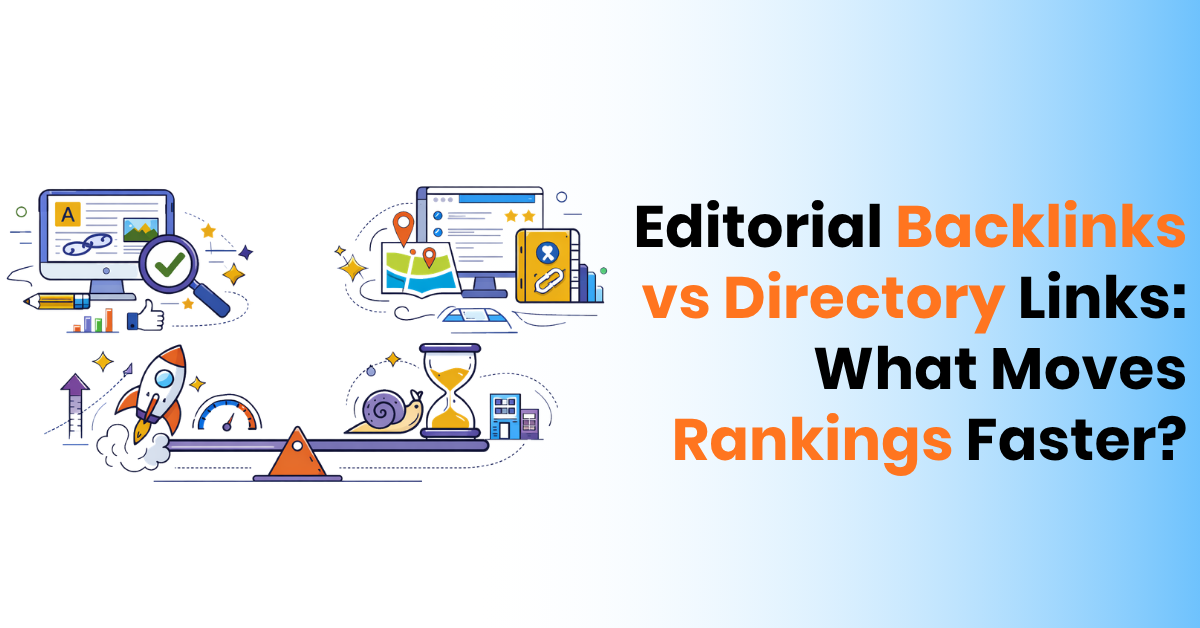
If you've been building directory links for six months and your rankings haven't moved, the problem probably isn't your patience. It's the type of links you're building.
Most link-building advice treats editorial backlinks and directory links as two ends of a quality spectrum — one good, one bad, pick accordingly. But that framing misses the real question: what job are you hiring each link type to do?
This article breaks that down clearly, with specific scenarios for when each type of link actually earns its place in a campaign — and when it doesn't.
What Makes a Backlink "Editorial"?
An editorial backlink is one that lives inside published content — a blog post, a resource guide, a news article — because a writer, editor, or site owner decided to include it. The key word is decided. Nobody paid for placement in a price list. Nobody submitted a form and got auto-listed. A real person, at a real publication, linked to your content because it added something to what they were writing.
That context matters to Google in a few specific ways:
Surrounding text signals topical relevance. When a link sits inside a paragraph discussing anchor text, outreach strategy, and link velocity, Google can evaluate whether that link fits the topic of the page it's on. A listing on a generic directory provides no such signal.
The editorial review process filters for quality. Even a modest review process — a real editor glancing at a submission before publishing — raises the bar compared to auto-generated listing pages. Google has gotten significantly better at detecting the difference between these two environments.
The link is naturally embedded in reading flow. Readers encounter editorial backlinks while actively engaged with content. That makes referral clicks more likely, engagement metrics stronger, and the link profile look more organic.
None of this is new. What is new is how aggressively Google's recent updates have enforced the distinction. Pages that compile links without adding genuine context or analysis have been losing ground steadily throughout 2025 and into 2026.
What Directory Links Actually Do
A directory link is a listing: your business name, URL, sometimes a description, on a page alongside dozens or hundreds of other businesses. The value of that link depends almost entirely on the quality of the directory itself.
Here's what directory links can genuinely accomplish:
NAP consistency for local SEO. For businesses with a physical location or a defined service area, having your Name, Address, and Phone number appear consistently across trusted directories (Google Business Profile, Yelp, local chamber of commerce sites, industry association directories) tells Google you're a real, stable entity. This matters for local pack rankings.
Foundational trust signals for newer domains. A brand-new site with zero backlinks and a handful of legitimate directory listings looks more credible than a site with zero backlinks and nothing else. It's a low bar, but it's a real one.
Discovery and referral in niche verticals. Certain directories — industry-specific ones with real active users — can send meaningful referral traffic. A legal directory that lawyers actively search is different from a generic business listing site that nobody reads.
The honest limitation: most directories don't do much beyond the above. A link from a site with no traffic, no editorial standards, and hundreds of outbound links on a single page is not going to move a competitive keyword. It's not going to damage your site either (in most cases), but it's not doing the heavy lifting your rankings need.
Why Editorial Links Move Rankings Faster
The speed difference comes down to two things: trust signals and topical authority.
Trust signals
Google evaluates the quality of the page linking to you, not just the fact that a link exists. A link from a page that has its own organic traffic, earns its own backlinks, and sits within a well-structured site is worth more than a link from a page that exists solely as a container for outbound links.
Editorial placements, when done well, come from pages that have earned their own authority. Directory listings almost never have that.
Topical authority
This is where the gap has widened most noticeably over the last two years. Google has become increasingly precise about what your site is an expert on, not just how many links point to it.
An editorial link from a marketing publication, embedded in an article about link building, pointing to your link building resource, sends a very clean topical signal. It says: people in this space consider your content worth referencing. A listing on a general business directory says almost nothing about your topical relevance.
Beyond traditional rankings, editorial backlinks are the primary signal used by AI Overviews to cite your brand as an authority. AI models synthesize 'Entity Trust,' and a directory listing doesn't provide the narrative proof an AI needs to recommend you.
For competitive commercial keywords — the ones actually tied to revenue — topical authority signals are often the deciding factor between page one and page two.
The Real-World Pattern We've Seen
Clients who come in with backlink profiles heavy on directory links and light on editorial coverage tend to have the same profile: decent branded search visibility, stable local rankings if they're a local business, but flat organic performance on their main commercial pages.
When the strategy shifts toward earning contextual editorial placements on niche-relevant publications — through genuine outreach, guest contributions, and content worth linking to — rankings on those commercial pages start moving. The timeline varies, but meaningful movement typically shows up within 60–90 days of building a solid batch of well-placed editorial links.
That pattern is consistent enough that we now treat it as a default: editorial placements first for ranking goals, directory links as supporting infrastructure for trust and local signals.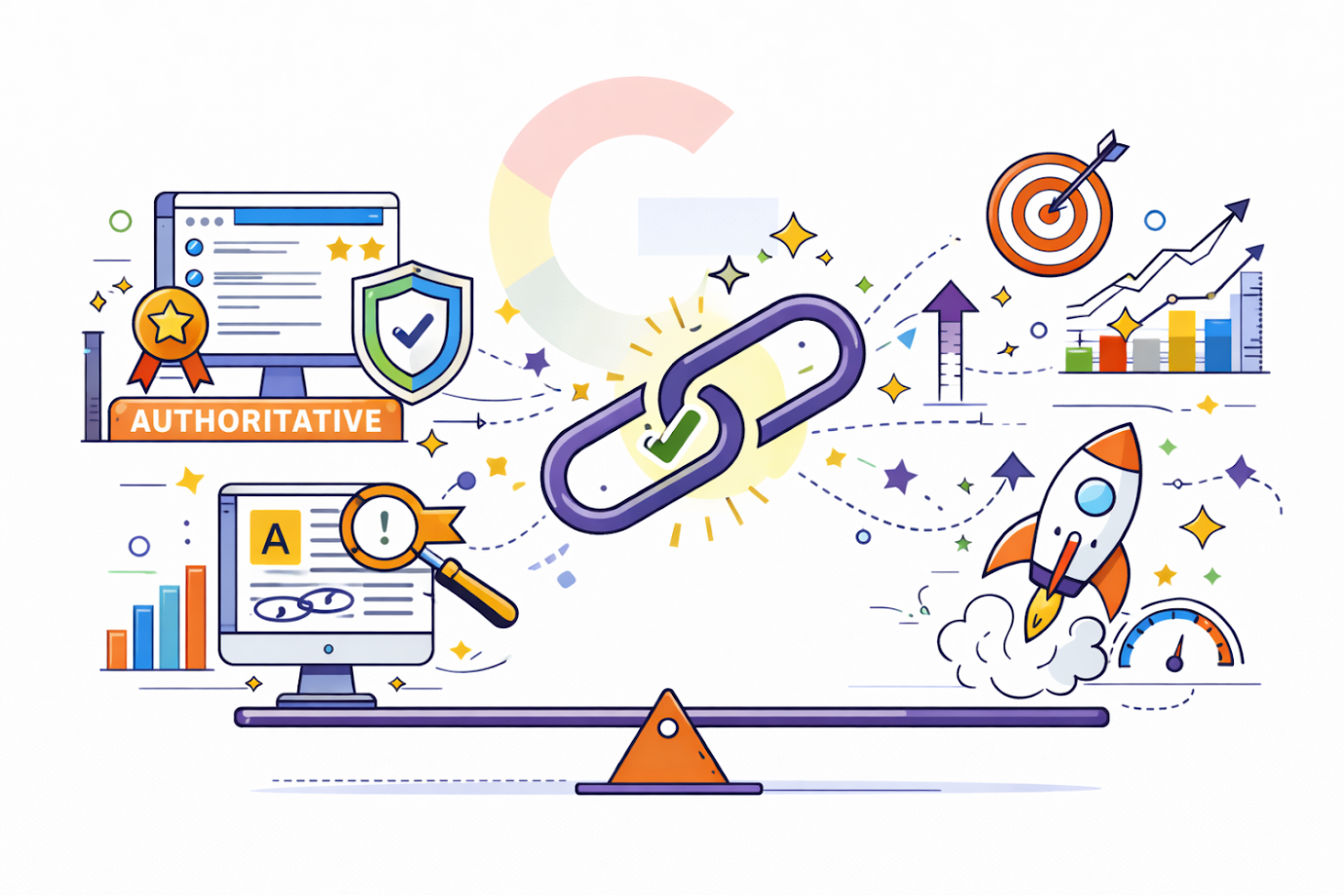
When Directories Belong in Your Strategy
With all the above said, here are the specific situations where directory links still earn their place:
You're building local visibility. If you want to rank in the local pack for "electrician in [city]" or "accountant near me," citation consistency across local directories is not optional. Build it deliberately with accurate, consistent NAP data.
Your domain is new. A site with no backlinks and no established presence looks like a stub. A handful of credible directory listings — industry associations, regional chambers, legitimate niche directories — helps establish basic entity recognition.
You're diversifying a link profile. A backlink profile composed entirely of guest posts can look as unnatural as one composed entirely of directories. Some legitimate diversity is healthy.
You're in a niche where directories carry real traffic. Research before dismissing. Some vertical-specific directories — legal, medical, financial, home services — have genuine user traffic and send meaningful referral visits.
Situations Where Directory Links Won't Help
Ranking competitive national keywords. If you're trying to rank a SaaS product page, an e-commerce category, or a high-intent service landing page against established competitors, directory links won't move that needle. The sites outranking you are earning editorial coverage and brand mentions from relevant publications.
Recovering from content quality issues. If Google has evaluated your content as thin or unhelpful, adding directory links doesn't address that signal. The fix is content quality, not link count.
Building topical authority. You cannot establish yourself as a recognized expert in your niche through directory submissions. Topical authority comes from earning links within content that discusses your topic.
How to Evaluate Any Link Before Building It
The question isn't "is this editorial or directory?" — it's "does this link add anything to my profile that Google would consider meaningful?" A few checks worth running:
Does the page linking to you have its own organic traffic? (Check via Ahrefs or Semrush — if a page has zero estimated traffic, reconsider.)
Does the surrounding content relate to your topic? A link from a cooking blog to a software tool is not a topical match, regardless of DA.
Does the site have a real editorial presence? Actual authors, published dates, content updated over time — these signal a site with genuine activity.
How many outbound links does the linking page have? A page with 400 outbound links dilutes the value of each one significantly.
Is the anchor text natural within the context? Exact-match commercial anchors in every editorial placement start looking manipulative at scale. Vary anchor text across a campaign.
A Practical Framework for Link Strategy
For most businesses, the right approach is layered rather than either/or:
Phase 1: Foundation Build a clean base of legitimate directory listings — industry-specific, regionally relevant, well-trafficked where possible. This handles local SEO, NAP consistency, and basic entity recognition. Don't over-invest here. A few dozen quality listings covers this base adequately.
Phase 2: Editorial placements targeting commercial pages Pursue contextual backlinks through genuine outreach, guest contributions, and content partnerships on publications your audience actually reads. Target placement on pages with real traffic and topical overlap with your niche. Anchor text should be varied and natural.
Phase 3: Track what matters Monitor keyword ranking movement on the specific pages you've been building links to. Track referral traffic from your editorial placements. Use Google Search Console to monitor indexed placement and impressions growth. Link count is a vanity metric — ranking and traffic movement are what you're building toward.
vefogix
Frequently Asked Questions
Yes, in the right contexts. For local SEO, citation consistency, and foundational trust on newer domains, quality directory links play a legitimate role. For ranking competitive commercial keywords, they're supporting infrastructure at best — not the primary driver.
There's no universal number. A handful of highly relevant, well-placed editorial links from authoritative niche publications will outperform dozens of weaker placements. The relevance and authority of the source matters more than quantity.
Yes, and for most campaigns, you should. Use directory links to handle foundational trust and local signals; use editorial placements to drive ranking movement on target pages. The two serve different purposes and don't compete with each other when used strategically.
Measuring success by link count instead of ranking and traffic movement. A large number of low-quality links with no contextual relevance won't move rankings — and in some cases, a concentrated pattern of them can attract scrutiny. Focus on the quality and topical fit of each placement, and measure the outcome that actually matters: did the target page move up?