5 Bulk Google Index Checker Tools Every SEO Professional Needs
Your content is live. Your backlinks are placed. Your on-page SEO is clean. But if Google hasn't indexed those pages, none of it matters you simply don't exist in search results.
At Vefogix, we've been working with brands, agencies, and SEO professionals since 2016, and one of the most quietly damaging problems we see across client campaigns is this: pages and backlinks that simply never get indexed. It's not always visible. It doesn't trigger an alert. Traffic just flatlines or never arrives at all.
Here's why this matters more than most people realise. Google does not index every page it crawls. Pages get skipped for dozens of reasons: thin or duplicate content, poor internal linking, crawl budget exhaustion on large sites, slow load speeds, or simply because the domain hasn't built enough authority for Googlebot to prioritise it. For clients running guest posting campaigns or link building outreach two of the core services delivered by an agency, an unindexed backlink is a wasted backlink. It doesn't pass authority, it doesn't drive referral traffic, and it contributes nothing to the rankings you're working toward.
The problem compounds silently. A page drops from the index and you don't catch it for weeks. A backlink goes live on an authoritative domain but never gets crawled. A new blog post sits unindexed for a month while competitors who published the same week are already ranking. These aren't edge cases they happen to well-managed sites every day.
Checking indexing status manually, one URL at a time through Google Search Console, is workable for a handful of pages. The moment you're managing a site with hundreds of posts, an ecommerce catalogue with thousands of product pages, or a guest posting campaign placing links across dozens of domains simultaneously, manual checking isn't a workflow it's a full-time job with no room for anything else.
That's exactly where bulk Google index checkers come in. These tools let you audit dozens, hundreds, or even thousands of URLs in a single pass, giving you a complete picture of your indexing health across your entire site and backlink profile. The best ones go further diagnosing the root cause behind unindexed pages, submitting URLs for faster pickup, and running scheduled monitoring so problems surface before they cost you rankings.
Whether you're an independent SEO consultant, an in-house digital team, or an agency managing multiple client accounts, staying on top of index coverage is one of the highest-leverage habits in your SEO workflow. Here are five tools that hold up under real-world use.
1. Google Search Console
Before spending a dollar on any third-party tool, Google Search Console needs to be embedded in your workflow. It's not the most powerful option for bulk operations, but no other tool has more accurate indexing data because it comes directly from Google itself.
The URL Inspection tool tells you whether a specific page is indexed, when it was last crawled, and whether Googlebot encountered any issues. The Coverage report gives you a property-wide view, flagging pages as valid, excluded, errored, or warned with clear categorisation of why each outcome occurred.
The catch: GSC was never designed for bulk operations. The API supports up to 2,000 URL inspections per property per day, and the interface limits you to one URL at a time manually. For large sites or agencies managing multiple properties simultaneously, that ceiling is a bottleneck.
Best suited for: Individual URL audits, diagnosing crawl issues, and acting as the authoritative source of truth when third-party tools return conflicting results.
Cost: Free.
2. Rapid Index Checker
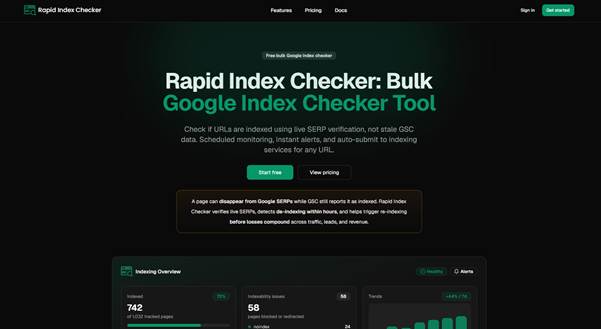
Most index checkers tell you whether a page is indexed or not. Rapid Index Checker tells you why it isn't surfacing specific technical issues including no index meta tags, robots.txt blocks, redirect chains, and other Googlebot-facing obstacles that prevent a URL from being processed correctly.
The workflow integration is where it earns its place. When the tool identifies a page that's technically indexable but still absent from search results, it can submit that URL directly to an indexing service without requiring a tool switch. Smart filtering on higher-tier plans ensures only clean URLs get submitted, avoiding wasted credits on pages that carry underlying technical issues.
Scheduled monitoring running hourly, daily, weekly, or monthly means you're tracking indexing status over time rather than running isolated audits. History is stored for up to three years on business plans, and alerts fire via email, in-app notification, or webhook the moment a status change is detected.
For agencies running link building campaigns, this kind of systematic monitoring ensures placed backlinks are actually being crawled and counted.
Best suited for: SEO agencies, link builders, and site owners who need diagnostic depth not just a pass/fail status on each URL.
Cost: Free tier available; paid plans unlock advanced features and extended history.
3. Indexly
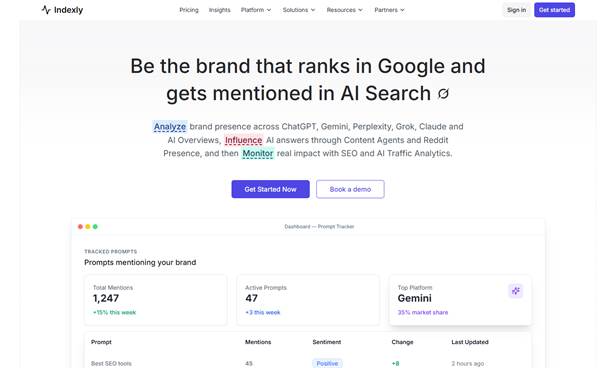
Indexly is a different category of tool. It's a full SEO and visibility platform where bulk index checking is one component of a much larger toolkit sitting alongside automated sitemap monitoring, technical SEO audits, keyword tracking, backlink analysis, and a feature most competitors haven't built yet: AI search visibility tracking.
That last capability is worth paying attention to. Indexly monitors how your brand appears inside AI-generated answers from ChatGPT, Perplexity, Gemini, Grok, and other large language model platforms tracking mentions, sentiment, and citation patterns. It also auto-generates an llms.txt file (the emerging equivalent of robots.txt, but designed for AI crawlers) to help LLMs understand your site structure and surface your content in AI-generated responses.
On the indexing side, Indexly uses Google's Indexing API and Bing's Index Now protocol to submit URLs significantly faster than waiting for natural crawl cycles. A "cruise mode" feature watches your sitemaps and automatically submits new pages the moment they're published. Users consistently report pages reaching indexed status within 24 to 48 hours of submission.
Best suited for: Marketing teams and agencies managing multiple clients who want traditional SEO monitoring, backlink tracking, and AI search visibility consolidated in one dashboard.
Cost: Paid plans from $99/month to $499/month for agency-level access.
4. Rank Watch
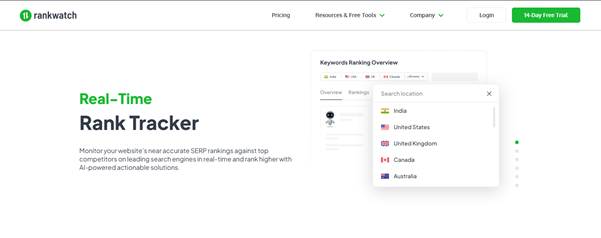
Sometimes the fastest tool is the right tool. Rank Watch's free Google Index Checker exists for exactly those situations quick answers, no account setup, no credit card, no dashboard to navigate.
Paste your URLs, click check, get results. It handles multiple URLs simultaneously, requires no login, and places no usage limits. For smaller sites, ad hoc audits, or quick pre-campaign checks before a guest posting campaign goes live, it handles the basics without any overhead.
It connects to a broader Rank Watch SEO suite covering keyword tracking, domain authority checks, competitor analysis, and meta tag analysis so there's a path to more comprehensive features if needed. But the free index checker functions as a standalone tool that requires nothing from you except the URLs.
Best suited for: Bloggers, small site owners, and anyone running a fast spot-check who doesn't need a full platform.
Cost: Free, paid plans available from $29/month.
5. Hyper Checker
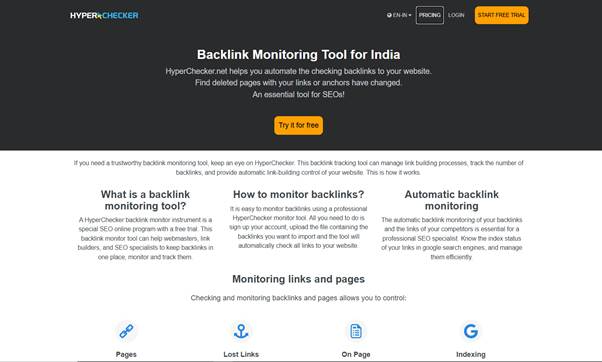
If your main concern is whether your backlinks are being indexed not just your own site's pages Hyper Checker targets that use case more precisely.
It operates in two modes: bulk link checks tied to a specific domain, and standalone checks for any URL regardless of where it sits. For agencies running outreach campaigns at scale, this distinction matters. An unindexed backlink on an authoritative domain delivers zero SEO value no authority transfer, no referral traffic, no ranking impact. Hyper Checker surfaces those gaps before they become wasted spend.
The tool also allows direct submission of links for indexing from the results interface, removing the need to jump between platforms. New accounts receive $3 in free credits for initial testing; ongoing usage runs at $0.005 per check a pricing model that scales efficiently for agencies auditing large backlink profiles regularly.
Where link building and guest posting campaigns place links across thousands of domains, this kind of granular backlink-level indexing visibility is exactly what keeps campaign ROI measurable and accountable.
Best suited for: Link builders and SEO specialists managing outreach campaigns who need to confirm that placed backlinks are being crawled and counted by Google.
Cost: $0.005 per check; new users receive $3 in free credits.
How to Pick the Right Tool for Your SEO Workflow
Most professional SEO teams end up running more than one of these alongside each other and that's the right approach. Google Search Console stays in the mix because its data comes from the source. A dedicated bulk checker handles the volume GSC can't. An integrated platform like Indexly makes sense when you want monitoring, submission, and reporting in one place.
A few questions worth working through before you commit:
- How many URLs do you need to audit regularly? Free tools handle 50 URLs comfortably. For thousands, you need API access or scheduled monitoring built in.
- Do you need to understand why pages aren't indexed, or just which ones? Diagnostic tools like Rapid Index Checker save significant time that would otherwise go to manual debugging.
- Is backlink indexation the primary concern? If so, Hyper Checker is built for exactly that workflow generalist tools aren't.
- Are you managing multiple client accounts? Prioritise platforms with multi-site dashboards, white-label reporting, and export capabilities.
The right tool is the one that maps to your actual workflow not the one with the longest feature list.
Conclusion
Index coverage is the foundation that all SEO performance is built on. You can produce genuinely useful content, secure high-authority backlinks, and maintain technically spotless pages but if Google hasn't indexed them, none of that effort converts into organic traffic. The problem is invisible until it isn't, and by the time most teams catch it, rankings and revenue have already taken a hit.
At Vefogix, we've seen this dynamic play out across client campaigns in every industry. A guest post goes live on a domain with strong authority but the page never gets crawled. A product update goes live on an ecommerce site but the new URL sits unindexed for six weeks while competitors capitalise. These aren't failures of strategy; they're failures of visibility into a process that happens entirely in Google's infrastructure, not yours.
The smartest approach is to treat these as complementary, not competing. Start with Search Console as your authoritative baseline, layer in a bulk tool matched to your volume, and add a specialist tool if backlink indexation is central to your campaign strategy which, for most link building and guest posting campaigns, it absolutely is.
Index checking isn't a one-time task. It's an ongoing discipline as routine as rank tracking or backlink monitoring that should run continuously in the background of your SEO workflow. Sites that catch indexing gaps early recover faster, waste less budget, and hold their rankings more consistently. Build the habit, run the checks, and treat any drop in indexed pages as the signal it is.
If you want support with link building, guest posting, or content marketing strategies designed to get indexed and rank Vefogix has been delivering those outcomes for over 5,000 brands worldwide since 2016.
vefogix
Frequently Asked Questions
A page won't appear in search results unless Google has indexed it, regardless of how well it's optimised. Common culprits are noindex tags, robots.txt restrictions, thin or duplicate content, weak internal linking, or crawl budget limits on larger sites. If the host page isn't indexed, it can't pass any link authority to whatever it links to.
There's no fixed timeline. High-authority sites that get crawled frequently can see pages indexed within hours; newer or less authoritative sites may take days or weeks. Submitting URLs via Search Console or the Indexing API speeds things up, and automated tools like Indexly typically get pages indexed within 24 to 48 hours.
You can't force it, but you can make it far more likely and faster. Submitting the URL via Search Console, building internal links from already-indexed pages, keeping your sitemap clean, and using the Indexing API all help. High-quality content and guest posting on well-crawled, authoritative sites also speed up backlink discovery.
This varies a lot by tool and plan. Google Search Console's API caps out at 2,000 inspections per property per day, free tools like RankWatch typically handle 10-50 URLs, and paid tools like Rapid Index Checker and Indexly support hundreds or thousands depending on your subscription tier.
Generally yes, as long as you're cautious. Legitimate tools check index status through public methods and don't need write access to your Google account. Be wary of any tool requesting more permissions than necessary, and avoid granting access without understanding why it's needed.
Indexing and ranking are separate outcomes — indexing means Google knows the page exists, while ranking depends on how it stacks up against competing pages. Run a competitive analysis: compare content depth, backlink profiles, and on-page signals like title tags and structured data against what's currently ranking. Vefogix's link building and content marketing services can help, but where you land ultimately depends on authority and relevance.