Google E-E-A-T: How to Create People-First Content
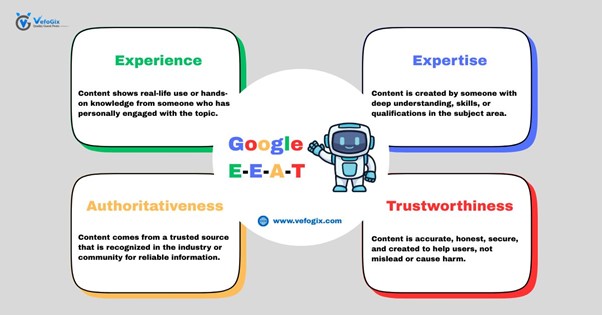
We live in a digital world now, and it's very important to make material that really connects with your viewers. Google E-E-A-T is a system that has become a guide for people who make content. If you know what E-E-A-T is and how to use it correctly, you can make your content plan much better and improve your search engine exposure. This blog post will go into detail about what is E-E-A-T, look at How to Create People-First Content and give you useful tips on how to make content that puts people first and not only gets people to your site but also builds trust and connection.
What is E-E-A-T?
Understanding, Expertise, Authority, and Trustworthiness, that is what E-E-A-T stands for. In order to figure out how good and trustworthy web content is, Google uses this structure. The Google EEAT standards stress how important it is to give people good, trustworthy information. This is especially important for YMYL (Your Money or Your Life) material since giving people the wrong information can have major effects on their health, finances, or safety.
The Evolution: From E-A-T to E-E-A-T
The concept started under the E-A-T name that stood for Expertise, Authoritativeness, and Trustworthiness. Since the Google EEAT update, the focus has changed to include "Experience." This update shows how important real-life experience is when writing content since Google's algorithm likes content more and more when it comes from people who really know about the subject.
Content makers should adapt to this shift because user preferences strongly demand real content supplied by experts. People prefer to receive information from individuals who have firsthand experience of the topic or who possess extensive knowledge. Experience has become the core focus as people shift their information consumption patterns in new directions.
Why E-E-A-T Matters
Figuring out E-A-T Seo is important for businesses, marketing, and people who write material that wants to rise better on Google. This is why it's important:
- Quality Over Quantity: Google gives more weight to material that meets the E-E-A-T standards. This means that pieces with lots of study and real-life examples will do better than general ones. Quality becomes the deciding factor in a time when there is a lot of material.
- User believes: Content that shows E-E-A-T makes users believe it, which leads to more involvement and fewer bounces. People are more likely to come back, share, and tell others about your material if they trust it.
- Google's Ranking Factors: E-E-A-T isn't a straight ranking factor, but it does affect how Google judges the quality of material, which can affect results in a roundabout way. Google's algorithms are more likely to support material that is high in E-E-A-T, which makes it more likely to show up in search results.
- Competitive Advantage: As more makers learn about E-E-A-T, those who use these ideas well will stand out as a competitive advantage. When businesses put E-E-A-T first, they can get an edge in their markets.
Core Elements of E-E-A-T
To use the power of E-E-A-T, you need to know what its main parts are:
1. Experience
The individual who has firsthand experience regarding the subject qualifies for this status. Someone who has visited the location delivers more beneficial information than someone who acquires knowledge only from internet sources. Life experiences contribute value to the material because they make it more accessible to the viewers.
How to Demonstrate Experience:
- Use personal stories and insights: Telling your audience about your journey and other personal experiences can help you connect with them more deeply.
- Include your photos or videos: Real pictures from your own life make you seem more trustworthy and interested.
- Give your tips: Help people by giving them tips or ideas that only someone who has been there or done that can understand.
2. Expertise
Expertise checks how much the author knows. A person qualifies for expertise through both academic methods such as college degrees and non-academic methods through several years of practical experience. Health writers with medical experience receive greater authority compared to common writers in their fields.
How to Build Expertise:
- Clearly List Author Credentials: Bring attention to your credentials, applicable experience, and any awards or honours that show you are an expert.
- Add links to relevant publications or works: Showing off past work can add confidence and show that you are an expert.
- Write about things that the author knows a lot about: Focusing on places where you have experience makes sure that the information is correct and useful.
3. Authoritativeness
Authoritativeness is a measure of how trustworthy the author or website is seen to be. This can be shown by having backlinks from trustworthy websites and a good image online. If you are seen as an expert in your area, your work will have a lot more respect.
How to Increase Authoritativeness:
- Gain Backlinks from High-Authority Sites: Working with trustworthy websites and being mentioned in their content can boost your authority.
- Publish Complete Content: If you write about all sides of a subject, people will see you as an expert who can help them.
- Engage with Influencers in Your Field: Getting to know influencers can help your image and give your work more respect.
4. Trustworthiness
Being trustworthy is probably the most important part of E-E-A-T. Making sure that your information is correct, safe, and trustworthy is part of it. Users won't be likely to come back or recommend your content if they don't trust it.
Building Trustworthiness:
- Ensure Your Site Uses HTTPS: Users will only trust a safe site.
- Give clear business policies and contact information: Being open about your business builds trust.
- Update content often: It's important to keep information up to date and correct to keep your credibility.
How to Create People-First Content
There are several ways to make material that follows Google's E-E-A-T standards. To make sure your writing puts people first, do the following:

1. Know who your audience is
Start by writing down the wants, needs, and problems of your target group. To learn more, use tracking tools, do polls, and look over the comments you obtain. The process of developing meaningful content that captures interest requires identifying your target audience.
2. Pay attention to good research
Spend time studying things in depth. Back up your claims with reliable sources, and make sure you properly quote them. This not only makes your E-E-A-T content better, but it also makes you look more trustworthy. Better study leads to more useful and helpful material.
3. Include your own experience
Talk about your events that are related to the topic. This not only makes it seem more real, but it also fits with Google's focus on experience in the real world. Personal stories can help people connect with and be interested in your material.
4. Use interesting layouts
It's not just words that people-first material is made of. You could add videos, slideshows, and podcasts to your material to make it more interesting to a wider range of people. Different methods can meet different learning styles and tastes.
5. Keep things open and honest
Be honest about how you create your content, including where you got it from and who you work with. Being open and honest builds faith and is in line with building E-E-A-T. Making your goals and sources clear can help people believe you.
6. Updates often
Make sure your information is always new and useful. Update pieces often to include new knowledge or changes in the field. This also helps users trust the site since wrong information can come from old data.
7. Get users to interact with you
Let people respond and give you feedback on your work. Participating with your crowd shows that you value what they have to say and makes the whole experience better for them. You can also build a community around your work by responding to comments.
How to Measure E-E-A-T Success
Take a look at these measures to see how well your material fits with E-E-A-T:
- Engagement with Users: Keep an eye on data like time on page, bounce rate, and comments to see how people use your material.
- Backlinks: Keep an eye on how many and how good the backlinks are to your content. Backlinks from high-quality sites can greatly increase your influence.
- Social Shares: Look at how often people share your material on different social media sites. High share rates can mean that the material is good.
- Search Rankings: Keep an eye on your chosen terms' search engine rankings. If your E-E-A-T gets better, you may move up in the results.
Practical Steps to Implement E-E-A-T
Step 1: Leverage Experts
Use the skills of people who have a lot of information or experience in the area of your material. Working with professionals can help you meet google EEAT guidelines and make your work better.
Step 2: Give reliable sources
Always use reliable sources to back up what you say. Citing studies, data, or expert views that you know are reliable can make your material more authoritative and trustworthy.
Step 3: Make profiles for the authors
Make thorough author bios for everyone who contributes to your material. Include their credentials, work history, and links to their other projects. Your viewers will believe you more if you are honest.
Step 4: Make it better for users
Your website design should enable effortless use for all users. A simple navigation structure on the website improves user experience since it plays a fundamental role in maintaining user engagement.
Step 5: Use Schema Markup
You should use style code as a method to enhance search engine comprehension of your writing content. Online search results ranking and internet trustworthiness can benefit from your website implementation of style code.
Step 6: Monitor Feedback
Ask for and keep an eye on comments from your audience on a regular basis. Check to see how well your material meets their needs through polls, notes, and social media exchanges.
Step 7: Keep up with the rules
As a user, you must stay informed about E-E-A-T rule updates and SEO techniques changes that Google announces. When you respond to changes immediately, your content can maintain its usefulness level and quality standard.
- Avoid Making These Mistakes: Not showing the author's credentials can make people less likely to believe them. People who read want to know who wrote the material.
- Using Stock Pictures: If you only use stock pictures in your work, it might not feel as real. Use original pictures to make things more relatable.
- Outdated Information: It's important to keep information accurate and up-to-date by changing it often. Users can be misled by material that is too old.
- Ignoring User Engagement: If you don't answer notes or reviews from users, you may lose touch with them. Participation builds community.
In conclusion
Sticking to Google's E-E-A-T rules is important for success in a world full of information. You can make your online visibility and user interaction much better by focusing on making content that puts people first and shows experience, knowledge, authority, and trustworthiness.
Whether you have been writing material for a long time or are just starting, knowing and following the Google E-E-A-T rules will set you up for long-term success in a digital world that is always changing. At VefoGix, we prioritize E-E-A-T to not only improve content quality but also build a brand that people can trust—essential in today’s competitive world of online content.
FAQs:
Ques 1: What does E-E-A-T mean?
Ans. E-E-A-T stands for Experience, Expertise, Authoritativeness, and Trustworthiness. It is a framework used by Google to evaluate the quality of content and websites.
Ques 2: What is Google's E-E-A-T model?
Ans. Google's E-E-A-T model emphasizes the importance of content that demonstrates the creator's experience and expertise, the site’s authority in the topic, and overall trustworthiness to enhance user satisfaction and search rankings.
Ques 3: What is an example of E-E-A-T in SEO?
Ans. An example of E-E-A-T in SEO is a health-related website that features articles written by certified medical professionals. This demonstrates expertise and trustworthiness, as well as real-world experience.
Ques 4: What is experience in E-E-A-T?
Ans. Experience refers to the firsthand knowledge or practical experience that content creators have about the topics they write about. It helps establish credibility and can enhance the quality of information presented.
Ques 5: Is E-E-A-T a ranking factor?
Ans. Yes, while E-E-A-T itself is not a direct ranking factor, it influences how Google assesses content quality, which can impact search rankings indirectly.
Ques 6: What is SERP in SEO?
Ans. SERP stands for Search Engine Results Page. It is the page displayed by search engines in response to a query, showing a list of results that includes organic listings, paid ads, and other features like snippets and knowledge panels.