Guest Posting for Brand Visibility: How to Build Awareness Beyond Backlinks
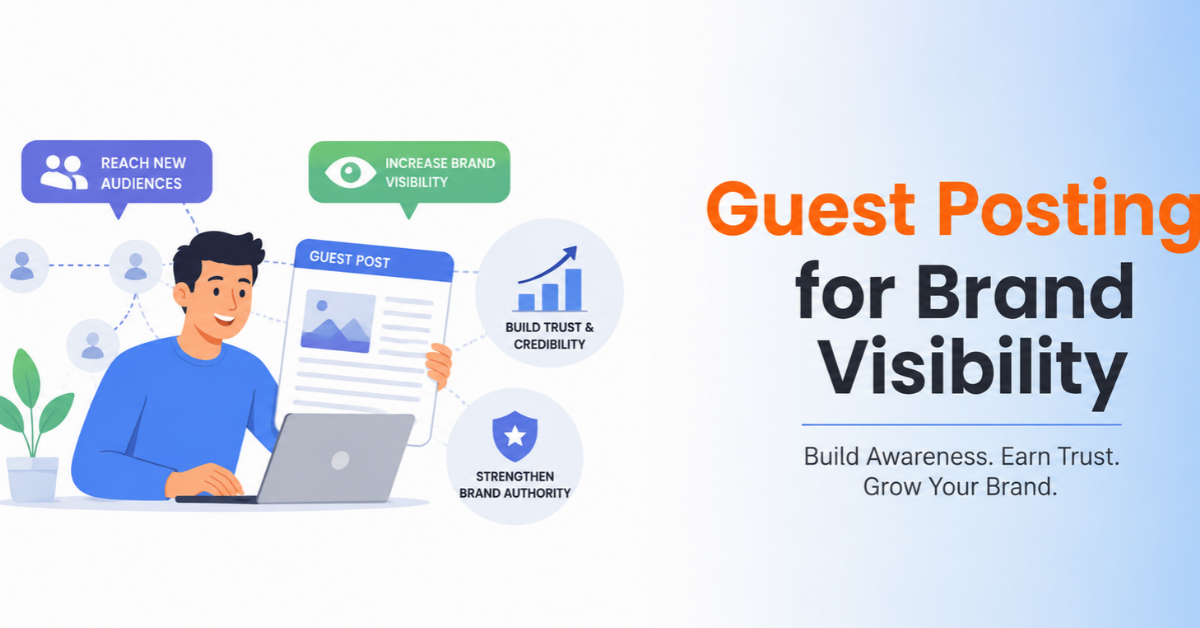
For years, guest posting has been treated primarily as a link-acquisition tactic: find a publisher, place an article, secure a backlink, and move to the next site. That approach still has a place in SEO, but it leaves out one of the most valuable outcomes of publishing on a trusted third-party website: putting your brand in front of a relevant audience.
Guest posting for brand visibility treats every placement as two connected assets. The first is the link, when one is editorially appropriate. The second is the brand impression created by the article, author, expertise, mention, and publisher context. When the goal expands from link volume to brand awareness, publisher selection, content planning, anchor text and measurement all need to change.
This approach is especially relevant as search becomes more fragmented. People discover brands through traditional search, referrals, social platforms, publisher content and AI-generated answers. A brand that appears consistently in useful, relevant third-party content can build recognition even when a particular placement does not produce a direct click.
What Is Guest Posting for Brand Visibility?
Guest posting for brand visibility is the practice of publishing useful, relevant content on third-party websites to increase brand recognition, audience exposure, referral traffic, and search visibility alongside traditional backlink benefits. The strategy prioritizes audience relevance and editorial quality rather than treating Domain Rating or link quantity as the only measures of success.
Why Guest Posting Is Moving Beyond Link Building
Link building remain an important part of SEO, and authority metrics can help evaluate potential publishers. However, a placement can create value that is not captured by a backlink report. A reader may discover a company through an article, remember its name, search for it later, visit directly, or encounter the same brand again on another trusted publisher.
How Guest Posts Build Brand Visibility
1. Relevant publishers put your brand in front of the right audience
Consider audience fit before raw authority. A publisher with a highly relevant readership can create more meaningful exposure than a higher-metric website whose audience has little connection to the product or service.
2. Useful content creates a stronger brand impression
A guest post should be valuable without the backlink. Original examples, practical advice, clear explanations, and useful data give readers a reason to remember the author and brand.
3. Natural brand mentions create recognition
Introduce the brand where it genuinely helps the reader. One contextual mention is generally more credible than repeatedly inserting a company name simply to increase brand frequency.
4. Referral visits create another brand touchpoint
Relevant referral traffic can be more meaningful than raw referral volume. Visitors who arrive after reading an article already have context about the problem, topic, or solution, which can make the visit more qualified.
5. Repeated exposure can strengthen recognition
Instead of scattering every placement across unrelated sites, consider building repeat relationships with a smaller group of strong, relevant publishers. Seeing a brand or expert more than once in a trusted environment can make the name more familiar.
Guest Posting for Brand Visibility vs. Traditional Link Building
|
Decision Point |
Traditional Link Building |
Brand-Focused Strategy |
|
Publisher selection |
Authority and price often lead the decision. |
Audience overlap, niche relevance, traffic quality and authority are evaluated together. |
|
Content angle |
Often starts with a target keyword or backlink requirement. |
Starts with a useful topic that serves the publisher's readers and introduces the brand naturally. |
|
Anchor text |
May emphasize target-keyword anchors. |
Uses branded, natural and context-appropriate anchors. |
|
Success metrics |
Links, referring domains and ranking movement. |
SEO metrics plus branded search, referral engagement, direct-traffic trends and repeat mentions. |
|
Publisher relationship |
Often treated as a one-off placement. |
Builds repeat relationships with publishers that remain relevant and editorially suitable. |
How to Choose Publishers for Brand Visibility
Use a publisher evaluation process that balances authority with audience quality. Before purchasing or pitching a placement, review:
- Niche and topical relevance
- Audience geography and language
- Estimated organic traffic and traffic trend
- Evidence of a real, engaged readership
- Editorial quality and publishing consistency
- Outbound-link patterns and obvious link-selling signals
- Content review and approval process
- Whether repeat placements are possible
- Authority metrics such as DA or DR as supporting, not standalone, signals
How to Create Guest Posts That Build Brand Awareness
Start with audience intent
Choose a problem the publisher's readers actually want solved instead of beginning with an anchor-text requirement.
Make the article independently useful
Give readers practical information, examples, frameworks, or original analysis that would still be worthwhile without the backlink.
Use the brand as evidence, not advertising
Mention the company when it provides relevant context, expertise, a useful resource or a genuine example.
Keep anchor text natural
Use branded, naked-URL and natural phrase anchors where appropriate. Avoid forcing exact-match phrases into prose.
Build topical consistency
Publish around a coherent set of subjects so the brand becomes associated with a recognizable area of expertise.
Plan repeat exposure carefully
Return to strong publishers only when the audience remains relevant and the editorial relationship supports another genuinely useful contribution.
How to Measure Guest Posting Beyond Backlinks
DR and referring-domain counts can remain useful SEO indicators, but they should not be the only scoreboard. Track the following metrics where reliable data is available:
Branded search
Look for changes in searches containing the company or product name after placements go live. Use Search Console and other suitable trend data.
Referral traffic quality
Review engaged sessions, page depth, conversions, and other meaningful engagement signals rather than visits alone.
Direct traffic trends
A sustained change in direct visits can be a useful directional signal, although attribution should be treated cautiously.
Unlinked brand mentions
Monitor relevant mentions of the brand even when no backlink is present.
AI answer appearances
Test relevant prompts across major AI answer systems and record whether the brand is mentioned or cited over time.
Repeat exposure
Track how often the brand appears on high-value publishers and whether those relationships generate continued qualified exposure.
Can Guest Posting Support AI Search Visibility?
Guest posting should not be presented as a guaranteed method for appearing in AI-generated answers. However, consistent coverage across relevant, credible third-party sources can contribute to a broader web presence. AI search visibility depends on many factors, and the relationship between individual guest-post placements and AI answers is still evolving. For broader context on brand mentions, links, and AI visibility, see BuzzStream's 2026 link-building statistics.
A practical approach is to treat AI visibility as an observation metric: identify relevant questions, test them periodically, record brand mentions and citations, and compare changes with the broader content and PR activity of the brand.
How a Guest Post Marketplace Fits Into a Brand Visibility Strategy
A guest post marketplace can make publisher research more systematic by bringing publisher metrics and filtering options into one workflow. For visibility-focused campaigns, useful marketplace features include niche, country, language, traffic and authority data, transparent pricing, editorial review and the ability to identify publishers suitable for repeat campaigns.
For teams that want a more structured way to evaluate and manage guest-post opportunities, Vefogix provides a marketplace and guest-posting services that bring publisher discovery, filtering and campaign management into one workflow.
When comparing providers, ask three questions: Does the platform show meaningful audience data rather than only DR? Can the buyer review the article and anchor text before publication? Can the buyer return to relevant publishers for future placements? These questions help shift the decision from buying isolated links to building useful publisher relationships.
A Practical Guest Posting for Brand Visibility Workflow
- Define the audience and brand topic you want to own.
- Create publisher criteria based on relevance, audience, geography, quality, and authority.
- Shortlist publishers and manually review their content and outbound-link patterns.
- Choose an article angle that solves a real reader problem.
- Write useful content with natural brand context.
- Use an editorially appropriate anchor or brand mention.
- Review the final placement before publication.
- Record the URL, publisher, publication date, link type, and campaign purpose.
- Monitor referral, branded-search and mention signals over time.
- Repeat only with publishers that continue to offer genuine audience value.
Common Mistakes to Avoid
- Choosing publishers only because they have a high DR
- Buying placements solely because they are inexpensive
- Writing articles that exist mainly to place a backlink
- Overusing exact-match commercial anchor text
- Forcing brand mentions into irrelevant sections
- Using the same publisher once and never evaluating repeat opportunities
- Treating AI-search visibility as a guaranteed result
- Reporting only links acquired instead of business and visibility signals
Conclusion
Guest posting has not stopped being a link-building tactic; it has expanded into a broader brand visibility opportunity. A strong placement can support SEO while also putting a brand in front of a relevant audience, creating referral opportunities and strengthening recognition across the web.
The key change is strategic: choose publishers for audience value as well as authority, create content that deserves to be read, mention the brand naturally, use anchors that fit the context, and measure outcomes beyond the backlink report. For brands investing in guest posting at scale, a marketplace can make this process more systematic by bringing publisher discovery, comparison, and campaign management into one workflow.
Vefogix can support this model by helping buyers evaluate guest-posting opportunities and manage placements. The strongest campaigns, however, should always start with relevance and reader value rather than link volume.
Frequently Asked Questions
Yes. The publishing process is similar, but publisher selection and measurement change. Prioritize audience relevance, editorial quality, and meaningful exposure while continuing to evaluate SEO value.
Yes. Readers do not see the link attribute while consuming an article. A relevant placement can still expose the brand to an audience, generate referral visits and create a memorable brand touchpoint.
Guest posting usually involves contributing content to a publisher, while digital PR is broader and often focuses on earned media, newsworthiness and coverage. They can overlap when guest content is used to build authority and brand awareness.
Neither metric should be used alone. Consider audience relevance, traffic quality, topical fit, editorial standards, and authority together.
Track branded search trends, qualified referral traffic, direct-traffic trends, unlinked mentions, repeat publisher exposure and, where appropriate, AI-answer appearances. Use multiple signals rather than attributing every change to a single placement.
There is no universal number. Consistent exposure on a smaller set of relevant, credible publishers can be more meaningful than a large number of unrelated placements.
Yes. DR can remain a useful comparative authority signal, but it should sit alongside audience and editorial-quality criteria rather than determine placement decisions by itself.
Yes. A marketplace can be useful when it provides enough publisher information for buyers to evaluate relevance, audience, and quality. Teams can also use agencies when they want outreach and campaign management handled for them.