Why Some Brands Get Cited and Linked While Others Get Ignored
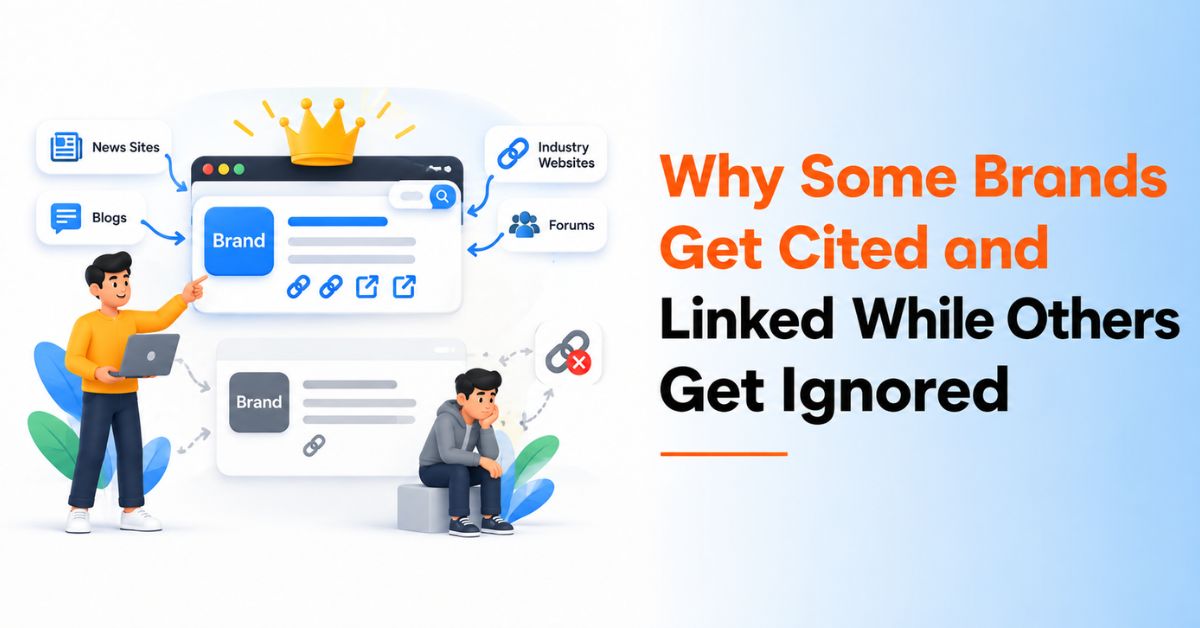
Some brands seem to earn backlinks and mentions naturally.
A journalist quotes their experts. An industry blog references their research. Other websites link to their guides, statistics, or original findings. Their brand keeps appearing in conversations they did not directly initiate.
Other brands can publish dozens of articles and send hundreds of outreach emails without getting the same response.
The difference is not always domain authority, content volume, or the size of the marketing team.
Often, it comes down to one simple question:
Does the brand give people a reason to mention it?
A backlink is usually the result of something useful, interesting, credible, or newsworthy. If your website does not give publishers anything worth referencing, simply asking for links becomes much harder.
This is why earning links should start with becoming a citable brand.
What Does It Mean to Be a Citable Brand?
A citable brand is a business, expert, or website that other people can confidently reference when discussing a particular subject.
For example, a publisher writing about SEO statistics may cite an original industry study.
A journalist covering search trends may quote an SEO professional.
A marketing blog explaining backlink costs may reference a pricing report.
In each case, the link is not the main reason for the mention.
The publisher has a reason to include the brand.
That distinction matters.
Instead of asking:
"How can we get more websites to link to us?"
A better question is:
"What can we create that other websites will want to reference?"
Once you start thinking this way, your content, digital PR, and link-building efforts can work together instead of operating as separate activities.
Why Some Brands Earn More Mentions Than Others
A website can have excellent technical SEO and still struggle to earn editorial links.
That is because publishers need more than a website to link to. They need a useful reason to do it.
A brand becomes easier to cite when it provides one or more of these:
- Original data
- Expert opinions
- First-hand experience
- Useful research
- Unique tools or resources
- Industry insights
- Clear explanations
- Reliable statistics
- Strong case studies
- Timely commentary
This creates a useful distinction between content created for search visibility and content created to become a reference.
Both have value.
But they serve different purposes.
1. Publish Information Others Cannot Easily Recreate
One of the strongest reasons for someone to cite your website is that you have information they do not have.
That could be original research, proprietary data, customer insights, surveys, experiments, or analysis of a large dataset.
For example, an SEO company could publish research showing:
- Average guest post prices across different industries
- Changes in backlink pricing over time
- Common anchor-text patterns
- Link-building trends across different markets
- Differences between publisher websites
- Industry-specific search behavior
A writer covering the same subject now has something useful to reference.
This is much stronger than publishing another article that summarizes information already available on ten other websites.
Make your research easy to cite
If you want people to reference your research, make the important information easy to find.
Use:
- Clear statistics
- Charts and tables
- Short summaries
- Methodology notes
- Publication dates
- Source information
- Original findings
A journalist should not have to read 3,000 words to discover your main finding.
Make the evidence obvious.
2. Give Your Experts Something Useful to Say
Being an expert is not enough.
Your expertise needs to become visible.
A business owner, SEO professional, developer, marketer, or subject-matter specialist may have years of experience, but that experience does not automatically generate mentions.
Turn that knowledge into useful commentary.
For example, instead of publishing only:
"SEO is changing because of AI."
An expert could explain:
- What has actually changed
- Which assumptions are no longer reliable
- What businesses should monitor
- What the change means for different types of websites
- What companies should avoid doing
Specific observations are easier to quote than generic opinions.
This can also create opportunities for digital PR, expert interviews, podcasts, industry publications, and journalist requests.
The goal is not to make every statement promotional.
The goal is to make the expert useful.
3. Support Your Claims With Evidence
Trust becomes harder to establish when every statement sounds like an opinion.
If you make an important claim, show readers why they should believe it.
Depending on the subject, evidence could include:
- Original research
- First-party data
- Industry studies
- Experiments
- Case studies
- Expert experience
- Public datasets
- Documented examples
This is particularly important when creating content intended to attract editorial links.
A publisher is more likely to reference a statement when the supporting evidence is clear.
It also makes your content more useful to readers.
Instead of saying:
"This strategy works."
Show what happened, under what conditions, and what the results were.
That gives another writer something concrete to reference.
4. Make Your Authors and Expertise Verifiable
People often evaluate the source before they cite it.
If an article makes a strong claim but the author is anonymous, has no relevant background, and provides no indication of their experience, the publisher has less reason to trust it.
Make expertise easy to understand.
Author profiles can include:
- Relevant professional experience
- Areas of specialization
- Industry contributions
- Certifications where relevant
- Published work
- First-hand experience
- Professional profiles
The information should be accurate and verifiable.
You do not need an exaggerated biography.
A concise author profile explaining why someone is qualified to discuss the subject is often more useful.
This is particularly important for content covering specialized or experience-driven topics.
5. Create Resources Publishers Can Actually Use
Not every article needs to become a backlink magnet.
Some pages are primarily designed to answer search queries.
Others can serve as reference resources.
Think about what a writer might need while researching an article.
It could be:
- A statistic
- A definition
- A calculation
- A benchmark
- A checklist
- A comparison
- A template
- A visual explanation
- A calculator
- A research report
- A collection of industry data
For example, a detailed guide can answer a searcher's question.
But a well-structured original study can become a source that hundreds of other articles reference.
That is a different content objective.
Before publishing a piece, ask:
"Would another writer have a reason to cite this?"
If the answer is no, consider whether the content needs more original information.
6. Turn Industry Knowledge Into PR Opportunities
You do not always have to wait for someone to discover your content.
Digital PR can put useful information in front of people who may have a reason to reference it.
Potential PR assets include:
- Original research
- Surveys
- Industry reports
- Expert predictions
- Proprietary data
- New product or market findings
- Expert commentary
- Industry trends
For example, if your company has analyzed thousands of websites, that analysis could become a story.
Instead of pitching:
"Please publish our latest article."
You could pitch:
"Our analysis of thousands of publisher listings found a significant difference in backlink pricing across industries."
The second pitch contains a potential story.
That is what makes it more interesting to a publisher.
For businesses that have a genuine company announcement, research finding, product update, or industry story to distribute, a press release service can be another way to put that information in front of publishers and media outlets.
7. Make Your Brand Easy to Reference
Even useful information can be difficult to cite if the website does not clearly identify its source.
Make your important resources easy to understand.
Include:
- A clear brand name
- Author information
- Publication date
- Updated date when relevant
- Research methodology
- Contact information
- Source notes
- Clear page titles
- Descriptive headings
If someone wants to reference your research, they should be able to quickly determine:
Who published this?
When was it published?
How was the information collected?
Can I trust the source?
This reduces friction for journalists, bloggers, researchers, and other publishers.
What About Traditional Link Building?
Being citable does not replace link building.
It changes what you have to offer during link building.
Traditional outreach often starts with the link:
"Would you add a link to our website?"
A stronger campaign can start with the resource:
"We created original research that supports the point you're discussing."
The second approach gives the publisher something useful before asking for anything.
This is where link building services can become more effective when combined with strong content assets.
The objective is not simply to acquire links.
It is to find relevant opportunities where your content, expertise, or research genuinely adds value.
What If Your Brand Has Already Been Mentioned?
Not every mention includes a backlink.
You may already have:
- Unlinked brand mentions
- Expert quotes
- References to your research
- Product mentions
- Company citations
- Social discussions
- Industry roundups
These can become link-building opportunities.
Start by identifying relevant mentions and checking whether the source has a reasonable reason to link to your website.
If someone references your original research but does not link to the study, a simple outreach message may be appropriate.
But avoid treating every unlinked mention as a problem.
A link is most useful when it helps the reader access supporting information.
This is also why brand mentions and backlinks should be viewed together rather than as competing signals. Our guide on brand mentions in SEO explains how linked and unlinked mentions can contribute differently to brand visibility, entity recognition, and search visibility.
Brand Mentions and Backlinks Are Not the Same Thing
A brand mention without a hyperlink can still contribute to visibility and recognition.
A backlink provides an additional path for users and search engines to discover the referenced page.
Neither should be viewed in isolation.
A healthy digital presence can include:
- Linked brand mentions
- Unlinked brand mentions
- Editorial backlinks
- Expert citations
- Media coverage
- Industry references
- Referral traffic
The important question is whether your brand is becoming more recognizable and useful within its subject area.
How This Can Support AI Search Visibility
The same qualities that make a brand useful to publishers can also help it become a stronger source of information for AI-powered search experiences.
AI search systems need information they can interpret, compare, and use when generating answers.
Brands that consistently publish original research, demonstrate expertise, provide clear evidence, and earn references across relevant websites create more signals about what they know and where their information comes from.
This does not mean that earning a backlink guarantees an AI citation.
It does mean that being a credible, well-referenced source is becoming relevant beyond traditional search results.
For businesses working on both SEO and AI search visibility, this makes original research, expert content, digital PR, and editorial mentions worth considering as part of the same broader strategy.
Our guide to link building in the age of AI search explores how link acquisition is changing as search becomes more AI-driven.
A Simple Framework for Becoming More Citable
You do not need to completely change your content strategy.
Start with this framework:
Create
Produce information that is genuinely useful or difficult to recreate.
Prove
Support important claims with data, evidence, examples, or first-hand experience.
Show
Make your authors, expertise, methodology, and sources visible.
Distribute
Use relevant outreach, digital PR, industry publications, and other channels to get your work in front of the right people.
Earn
Let publishers decide when your research, expertise, or resources are useful enough to reference.
Over time, this can create a stronger cycle:
Expertise → useful information → visibility → mentions → citations → backlinks → greater visibility
The cycle does not happen automatically, but each successful reference can make the next opportunity easier.
Final Takeaway
The easiest brands to mention are usually the ones that give publishers something worth mentioning.
They have data others cannot easily recreate. Their experts have useful opinions. Their content supports claims with evidence. Their authors are identifiable. Their resources solve problems for readers.
That is the foundation of becoming a citable brand.
Instead of making every link-building campaign about asking for a link, build things that deserve to be referenced.
Create something useful. Make it credible. Make it easy to cite. Then put it in front of the people who need it.
That is how backlinks and brand mentions become outcomes of a stronger content and visibility strategy rather than the only goal.
Frequently Asked Questions
A brand becomes worth citing when it provides reliable information, original data, expert knowledge, useful resources, or insights that add value to another publisher's content.
Create assets that naturally give publishers a reason to reference you. Original research, industry data, expert commentary, useful tools, and detailed resources are examples of content that can attract editorial mentions and links.
Yes. An unlinked mention can still increase brand visibility and recognition. It can also identify a potential outreach opportunity when adding a link would genuinely help readers.
No. Smaller businesses can use original research, expert commentary, surveys, local insights, and niche-specific data to create PR opportunities. The strength of the story matters more than the size of the company.
Original research can attract references, backlinks, referral traffic, and brand mentions. It can also make a website more useful as a source of information. However, publishing research does not automatically guarantee rankings or backlinks.
AI search visibility depends on many factors, so there is no single tactic that guarantees citations. However, publishing original information and building credible references across relevant sources can help establish stronger signals around a brand's expertise and information.