How to Buy Backlinks Safely: 2026 SEO Guide for Beginners
You’ve been told you need backlinks.
Your developer says it. Your marketing friend says it. Every SEO blog says it.
So you start searching… and suddenly you’re knee-deep in offers: $10 links, “DA 90 guaranteed,” random DMs, and something called a Guest Post Marketplace. It’s confusing. And honestly? A little scary.
You don’t want to get penalized. You just want results.
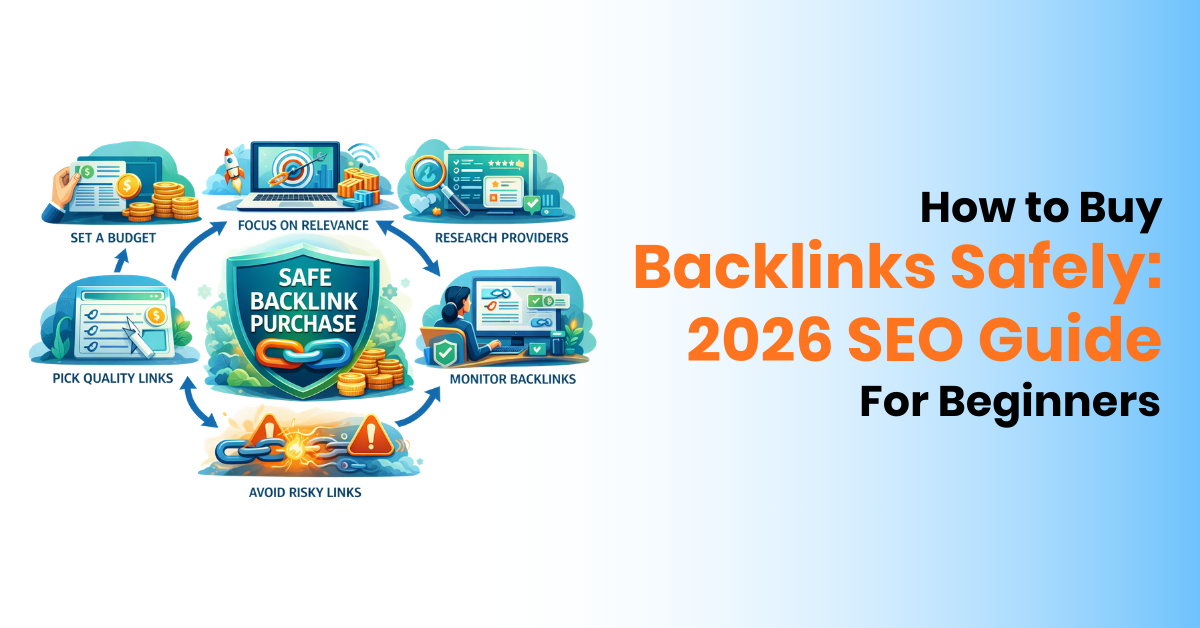
Buying your first backlink without getting penalized comes down to three things: relevance, transparency, and moderation. You choose sites that match your niche, avoid spammy networks, and treat backlinks as part of a broader SEO plan, not a shortcut. Smart placement beats cheap volume every time.
Let’s break this down in plain English.
Why Google Penalizes Backlinks in the First Place
Google doesn’t hate backlinks. It runs on them.
What Google hates is manipulation. When links are bought in bulk, placed on unrelated sites, or inserted into obvious link farms, it sends a signal that rankings are being gamed. That’s when penalties happen.
The problem isn’t paying for placement. The problem is paying for garbage.
A clean, editorial-style placement on a real website? That’s very different from 500 sidebar links on casino blogs.
What a “Safe” Backlink Actually Looks Like
Most non-tech founders think safety means “high DA.” It doesn’t.
A safe backlink usually checks these boxes:
- The website has real traffic (not just metrics)
- The content is relevant to your industry
- The article reads naturally
- Your link makes contextual sense
- It’s not stuffed with 10 other outbound links
If you’re buying through a guest posting service or working with a guest post service provider, these are the questions you should be asking them.
We’ve seen brands overspend on flashy metrics while ignoring relevance. And relevance is what protects you.
Where Non-Techies Go Wrong
I’ve seen this play out dozens of times.
A founder gets excited about “fast SEO wins.” They jump into a random freelance marketplace, hire someone offering 50 links for $99, and sit back.
Two months later, rankings dropped, traffic dips, and panic sets in. The freelancer disappears.
The issue wasn’t backlinks. It was buying backlinks without understanding what they were buying.
Many cheap freelance gigs use private blog networks (PBNs). These are sites built only to sell links. They look real at first glance. They’re not.
And Google’s gotten very good at spotting them.
How to Buy Backlinks Safely: A Step-by-Step Guide.
If you're new to SEO, here’s the mindset shift:
You’re not buying “a link.” You’re buying placement, relevance, and visibility. Think of it like PR, not hacking.
Step-by-Step: How to Do It Safely
- Start with one link, not ten. Test quality before scaling.
- Choose niche relevance over high metrics. A DA 40 site in your industry beats a DA 80 general blog.
- Ask for traffic screenshots. Real organic traffic matters more than domain score.
- Review the site’s past guest posts. Are they readable? Or obviously paid?
- Avoid sites that publish 20 guest posts per day. That’s a red flag.
- Diversify anchor text. Don’t force exact-match keywords every time.
If you’re using seo link building services, this checklist keeps you in control.
Should You Use a Marketplace, Freelancers, or an Agency?
This is where things get interesting in 2026.
There are now structured platforms like a link building Marketplace or full Guest Post Marketplace systems where publishers list available placements with pricing and metrics. It works like a curated hiring marketplace for backlinks.
But that’s not your only option.
You’ll also find skilled SEO professionals offering backlink packages inside a freelance marketplace, where freelancers showcase their profiles, reviews, and ready-made freelance gigs.
Let’s break it down.
Option 1: Guest Post or Link Building Marketplace
These platforms list individual websites where you can buy placements directly.
Pros:
- Transparent pricing
- Clear SEO metrics
- Faster turnaround
- Direct control over site selection
Cons:
- You must evaluate quality yourself
- Strategy is usually not included
- Easy to focus too much on metrics
If choosing the right individual site feels overwhelming, this model can feel technical fast.
Option 2: Freelancers on a Marketplace
Instead of picking sites one by one, you can hire an expert through a freelance marketplace. Many experienced SEO specialists list backlink packages as structured freelance gigs.
They handle prospecting, outreach, negotiation, and content.
Pros:
- More affordable than agencies
- Flexible budgets
- Personal communication
- Execution handled for you
Cons:
- Quality varies widely
- Requires vetting the freelancer
- Not all sellers use white-hat methods
If reviewing individual publisher sites feels confusing, exploring a freelancer offering a clear process can be easier. Just review their past placements and results carefully.
So What Should You Choose?
If you're brand new, starting with a trusted best guest post marketplace can help you understand pricing and quality benchmarks.
If selecting individual sites feels difficult, explore a vetted expert inside a reputable freelance marketplace and review their freelance gigs carefully.
If you want a structured, long-term SEO growth plan tied to revenue, not just links. Professional link building services are usually the safest bet.
Whichever route you take, remember: you’re not just buying links. You’re investing in authority.
A Quick Story From the Field
A few years ago, we worked with a local service brand trying to grow national visibility. They’d previously bought 200 cheap links through a random seller on a freelancer marketplace.
Traffic was flat. Rankings were unstable.
Instead of disavowing everything immediately, we audited the links. Only 30 were salvageable. The rest were irrelevant directory spam.
We paused link buying completely. Then we secured just five high-quality placements through a niche Guest Posting Service, each tied to strong, useful content. No keyword stuffing. No weird anchors.
Within four months, their core service page moved from page three to the bottom of page one. Not explosive. But stable.
That’s the difference between volume and strategy.
How Many Links Should You Buy?
This is the question everyone asks. The honest answer? It depends on competition.
If competitors have 500 referring domains, your single backlink won’t magically outrank them. But quality compounds.
For most small to mid-size brands investing in seo link building services, a steady pace works best, think 3–8 quality links per month depending on budget and niche competition.
Slow growth looks natural. Spikes look suspicious.
Red Flags You Should Never Ignore
If you remember nothing else, remember this list:
-
“Guaranteed #1 rankings”
- No sample sites provided
- All links are dofollow, exact match
- Sites unrelated to your industry
- Payment only via crypto or untraceable methods
- Seller refuses to share publisher URLs before payment
A real guest post service provider won’t hide the basics.
Backlinks Are Only Part of SEO
Here’s something many providers won’t tell you. Backlinks amplify what already exists.
If your website has weak content, poor technical SEO, or thin service pages, links won’t fix that. They’ll just expose it faster.
The smartest brands combine:
- Strong on-page optimization
- Clear conversion paths
- Technical health
- Measured link building services
That mix protects you from penalties and actually drives revenue—not just traffic.
Final Thought: Play the Long Game
If you're buying your first backlink in 2026, you’re not late. You’re just entering a more mature market. Google’s smarter. Marketplaces are more structured. Spam is easier to detect.
That’s good news. Because now, doing things the right way actually works. Start small. Stay relevant. Ask better questions.
Backlinks aren’t dangerous when they’re strategic. They’re dangerous when they’re careless.
And you don’t need to be technical to tell the difference.
Frequently Asked Questions
No, it’s not illegal. But it can violate Google’s guidelines if done in a manipulative way. When you use trusted link building services or a vetted Guest Post Marketplace, and focus on relevance and editorial quality, the risk drops significantly.
In low-competition niches, sometimes yes. But in most industries, one link won’t move the needle much. Think of backlinks as momentum builders. Brands investing in steady seo link building services usually see stronger, more stable growth over time.
Start with one niche-relevant guest post on a real website with organic traffic. Whether you use a guest post service provider or a structured link building Marketplace, always review the site, content quality, and outbound links before paying.
They can be—but you have to be careful. Many sellers on a freelance marketplace offer bulk links that come from PBNs or low-quality blogs. If you’re exploring freelance gigs, ask for real traffic proof and past placements before hiring.
In 2026, a solid niche-relevant guest post typically ranges from moderate to premium pricing depending on traffic and authority. Very cheap links are usually risky. A legitimate Guest Posting Service will explain what you’re paying for—placement, content, and outreach.
Avoid aggressive exact-match keywords. Use branded anchors, natural phrases, or partial keywords. A good guest blogging outreach service will guide you on anchor diversity so your link profile looks natural.
Look for patterns. Too many guest posts. Generic topics. Dozens of outbound links per article. No real engagement. If you’re unsure, consult a professional offering seo link building services before moving forward.
If you want strategy and long-term planning, agencies offering link building services are better. If you prefer hands-on control, a structured best guest post marketplace or curated hiring marketplace can work—as long as you evaluate quality carefully.
Usually not immediately. Penalties often happen after patterns build up. That’s why buying 50 links at once through random freelance gigs is risky. Slow, relevant, and strategic placements are far safer.
Absolutely. Backlinks still signal authority and trust. But they work best when paired with strong content, clean technical SEO, and smart conversion strategy. Treated as part of a full marketing system—not a shortcut—they remain one of the most powerful ranking factors.