How to Choose a Link Building Service That Actually Moves Rankings
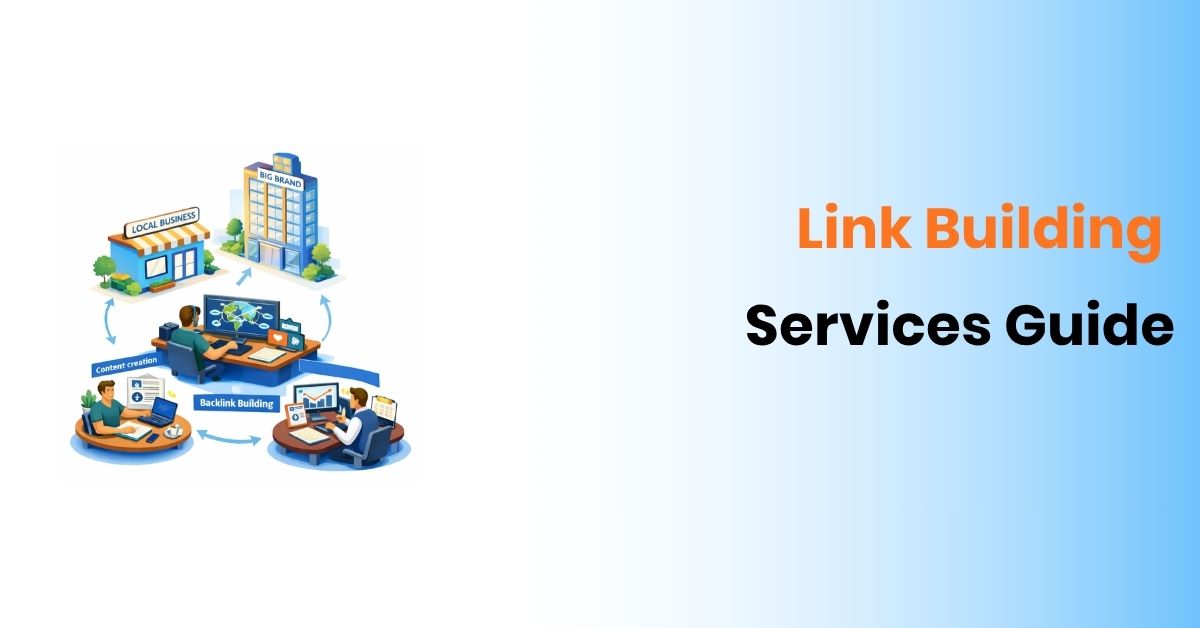
Most link building budgets don't get wasted on bad tactics. They get wasted on services that can't be properly evaluated until after the damage is already done.
The pattern is consistent: links go live, rankings don't move, an algorithm update arrives, the site drops. The post-mortem reveals the same set of problems every time — links placed on sites that exist primarily to sell links, anchor text distributions that look manipulative in aggregate, placements buried in low-traffic pages that pass no meaningful authority, or a fundamental mismatch between the sites linking in and the topic the target page is trying to rank for.
None of this is visible at the point of purchase. It becomes visible months later, when the evidence is either a page that moved or a page that didn't.
This guide is built to help you evaluate link building services before that point — with specific questions to ask, specific red flags to watch for, and a practical campaign framework that produces ranking movement you can actually attribute to the work.
What a Link Building Service Should Actually Do
The gap between what link building services describe and what they deliver is wider than in almost any other area of SEO. The marketing language is consistent across nearly every provider — "high-quality placements," "real editorial sites," "white-hat methods" — but the operational reality varies enormously.
A service that actually functions well operates more like a campaign partner than a link vendor. Before placing a single link, the work should cover four things:
A backlink profile audit. You need to know what's already pointing to your site — how many links, from what sources, with what anchor text distribution — before adding new links on top of it. Building on a weak or toxic foundation compounds the problem. Any service that wants to start placing links before reviewing your existing profile is skipping a step that materially affects outcomes.
Page-level targeting. Not all pages need the same link type or volume. A commercial page building topical authority from scratch needs something entirely different from a product page sitting at position 8 trying to reach the top 5. Service pages in competitive local markets need different anchor strategies than informational blog content. A service that treats all pages as interchangeable isn't doing strategy — it's doing fulfillment.
Anchor text planning before outreach begins. Anchor text distribution across a backlink profile is one of the clearest signals Google uses to evaluate whether link building looks natural or manipulative. A profile with too many exact-match commercial anchors is a well-documented penalty trigger. According to Google's link spam documentation, large-scale link schemes with keyword-rich anchor text are explicitly flagged. Any service that doesn't discuss anchor strategy before placing links is either unaware of this or choosing to ignore it.
Results tracking at the ranking level, not the link level. The deliverable from link building isn't links — it's ranking movement on target pages and the downstream traffic and conversion improvements that follow. A service that reports on links acquired without connecting those links to page performance isn't measuring what actually matters.
Legitimate Marketplace vs. Link Farm — How to Tell the Difference
This is where most buying mistakes happen, and it's worth being direct about what separates a legitimate guest post marketplace from a link network operating under a different name.
Legitimate placements share verifiable characteristics: the publishing site has real organic traffic from relevant queries, the content reflects genuine editorial standards, the site doesn't visibly exist to host paid links, and the link appears in context where an editor would have chosen to include it.
Link farms have the opposite profile. Sites are included based on domain metrics, not editorial quality. Traffic is minimal or absent. Content is thin. Multiple outbound links on the same page point to completely unrelated sites. Per-link pricing is low because no real vetting is happening.
Moz's own DA documentation explicitly states that DA is a predictive score, not a Google ranking factor. A DR 55 site can be a genuine editorial publication or a link farm — the metric alone tells you nothing about which it is.
The practical test before any purchase:
|
Check |
What to Look For |
Red Flag |
|
Organic traffic |
Real traffic from relevant queries (verify in Ahrefs/Semrush) |
High DA, zero or fake traffic |
|
Outbound link pattern |
1–3 contextual links per article |
6+ outbound links to unrelated sites |
|
Content quality |
Coherent, topic-focused, human-written |
Thin, keyword-stuffed, AI-mass-generated |
|
Publisher vetting answer |
Specific criteria + removal process |
"We filter by DA and traffic" |
|
Traffic data on request |
Provided freely before purchase |
"You'll see when the link is live" |
Ask any platform directly how they vet publishers and — critically — what causes a publisher to be removed from their network. A service with real standards can describe specific removal triggers. A service without them describes their intake filter and nothing else.
Guest Posts vs. Link Insertions — When to Use Each
Both are legitimate components of a complete link building strategy. The question isn't which is better — it's which is right for a specific page at a specific stage.
Use guest posts when you're building topical authority from scratch. A newly published page targeting a competitive keyword has no third-party editorial endorsement yet. Guest posts on topically relevant publications create that signal — they tell Google that real sites in the relevant niche have chosen to reference your content. Best for: commercial pages, service pages, cornerstone blog content, and any page establishing authority in a new topic area.
Use link insertions when a page already has traction but has stalled. Link insertions place contextual links inside already-published, already-indexed content. Because that content already has authority, the signal flows through faster than waiting for a fresh guest post to be crawled, indexed, and evaluated. Best for: pages sitting in positions 8–15 on a target keyword that need a push rather than a foundation, or for high-value product pages where topical authority is already established.
A concrete example of how the compound approach works: A SaaS client came to Vefogix in late 2024 after six months of consistent guest posting. Their target page had moved from position 22 to position 11 — real progress — but had stalled. Six months of guest posts had built the topical authority signal. What the page needed next was an incremental authority push, not more foundation work.
We ran eight targeted link insertions from niche-relevant, already-indexed content over six weeks. The page moved from position 11 to position 6. Neither phase would have produced the same outcome alone in the same timeframe. Guest posts to build — link insertions to break through.
For a deeper look at when insertions outperform guest posts and when they don't, see our full link insertion services guide.
The 5 Questions to Ask Before Hiring Any Link Building Service
These questions are designed to reveal the difference between services with real operational standards and those selling on marketing language alone.
Question 1: How do you vet publishers — and what causes a site to be removed from your network?
The second half of this question is more revealing than the first. Any service claims to vet publishers. A service with real standards can describe specific removal triggers: traffic dropping below a threshold, discovery of link-selling patterns across the network, content quality declining below editorial standards. A service without real standards describes its intake filter and has no answer for what happens afterward.
Question 2: Can you show me traffic data for publishing sites in my niche before I commit?
Any service operating on real sites with real traffic should be able to pull organic traffic data for specific publishers on request. "We can't share that" or "you'll see the site when the placement is ready" signals they aren't confident the traffic data would be reassuring.
Question 3: How do you approach anchor text distribution across a campaign?
The right answer involves asking about your existing anchor profile first. If a service proposes an anchor strategy without first reviewing what's already pointing to your site, they aren't managing anchor distribution — they're placing links with whatever anchor text you request. Over time, that creates exactly the distribution problems that attract algorithmic scrutiny. For context on why anchor text strategy matters more than most buyers realize, see our dofollow backlinks guide.
Question 4: What link velocity do you recommend for my current authority level?
The right answer is always "it depends" — specifically on your current domain authority, the competition level in your niche, your existing link acquisition rate, and whether your profile shows patterns that need rebalancing. A flat recommendation ("we build 10 links per month for everyone") signals the service isn't calibrating to your situation.
Question 5: What happens if a placement underperforms or a publisher goes dark?
Services that stand behind their work have a specific answer: replacement placements within a defined window, refunds under defined conditions, or some clear form of accountability. Services that treat each placement as a closed transaction once the link goes live are showing you exactly how they'll respond when problems arise.
A Practical Pre-Purchase Evaluation Framework
Before purchasing from any service or marketplace, run through this sequence in order:
Step 1 — Audit your existing profile first. Use Ahrefs, Semrush, or Google Search Console to understand what's already pointing to your site. Look at anchor text distribution across the full profile, the authority and organic traffic of existing linking pages, and whether there are toxic or spammy links that need disavowing before you build on top of them. Starting a campaign without this baseline is like renovating on a cracked foundation.
Step 2 — Define target pages and their specific needs before any outreach. Be specific: which pages are you building links to, what keywords they target, their current ranking position, and what anchor text distribution is appropriate given their existing profile. Commercial pages, blog posts, and local pages all have different requirements. A service that doesn't ask these questions before proposing a campaign isn't ready to run one.
Step 3 — Review live placements in your niche before committing to volume. Ask to see 3–5 examples of live guest posts or link insertions in your category. Check the content quality surrounding the link, how many outbound links the page contains, whether the anchor text reads naturally in context, and whether the publishing site has real organic traffic. This step alone eliminates most low-quality providers.
Step 4 — Start with a test batch and measure against a clean baseline. Run 5–10 placements over 30–45 days before scaling. Set up rank tracking on target pages before the links go live so you have a real baseline. Evaluate ranking movement at the 60-day mark before increasing volume. Scaling without this data is how link building budgets disappear without explanation.
Step 5 — Track at the page level, not the link level. The metrics that matter are ranking movement on target pages, referral traffic from placed links, and downstream conversion improvement — not total links acquired. A campaign producing 20 links with no ranking movement is underperforming a campaign producing 8 links with measurable position improvement. Report on what moved, not what was placed.
What Link Building Should Actually Cost in 2026
Pricing varies significantly, and the useful range depends on what you're buying.
|
Link Type |
Typical Price Range |
What Drives Cost |
|
Guest posts (niche sites, real traffic) |
$80–$500 per placement |
Site traffic, DA/DR, editorial standing, niche |
|
Link insertions (in indexed content) |
$40–$200 per placement |
Page authority, traffic, content relevance |
|
High-DA editorial placements (DA 60+) |
$300–$800+ |
Genuine editorial authority, organic traffic |
|
Bulk/package links (suspiciously cheap) |
$10–$50 |
Almost always low-quality, often link farms |
Anything significantly below the realistic ranges almost always means one of two things: the publishing sites have no real organic traffic, or the content quality is low enough that the editorial context creates no meaningful ranking signal.
The metric worth calculating isn't cost per link — it's cost per ranking position moved, and eventually cost per incremental conversion from improved rankings. A $300 placement that moves a page from position 9 to position 4 and generates additional monthly revenue is a fundamentally different investment from a $60 placement that produces a link and nothing else.
Running this calculation requires page-level rank tracking with a clean baseline before links are placed. Most link building campaigns that fail to demonstrate ROI fail partly because no measurement system was set up to capture it.
To compare specific providers and packages across the market, see our best link building agencies comparison for 2026.
The Biggest Mistake Buyers Make After Choosing a Service
Choosing the right service is only half the problem. The other half is what buyers do — or don't do — once the campaign starts.
The most common post-purchase mistake is treating link building as a set-and-forget channel. Links go live, the buyer waits for results, and when results don't appear after 30 days, they either double the volume or abandon the campaign entirely. Neither response is correct.
Link building compounds. The ranking signals from a well-placed link typically take 6–12 weeks to manifest in meaningful position movement for mid-competition keywords. Doubling volume at week 4 because page-one rankings haven't appeared yet introduces too much link velocity too fast, and abandoning at week 4 means walking away before the campaign has had enough time to work.
The right response at 30 days is a review of placement quality — not a volume adjustment. Are the links live and indexed? Are they dofollow? Are they appearing in relevant content on sites with real traffic? If the answer to all three is yes, the campaign needs time, not changes. If any answer is no, that's a quality problem requiring a conversation with the service provider, not a patience problem.
Set a 90-day evaluation window, review at the page level, and make volume or strategy adjustments based on actual data — not the anxiety of week four. For white-label agencies managing this on behalf of clients, see how this framework applies in our white label link building guide.
Ready to evaluate Vefogix against the criteria in this guide? See how we vet publishers or browse the marketplace to review live publishers, traffic data, and pricing before committing to any placement.
vefogix
Frequently Asked Questions
Check three things operationally: do they require original, niche-relevant content for every guest post placement? Do they vet publishers for real organic traffic rather than relying solely on DA or DR? Will they share traffic data on specific publishing sites before you commit to placements? A service that answers all three with specifics is operating with real editorial standards. One that deflects or gives vague answers about "quality" is telling you something important about what their standards actually are.
Both, with a clear purpose for each. Homepage links build domain-level authority and brand recognition signals. Inner page links build the page-level authority that drives ranking movement on specific target keywords. Most campaigns need both — the ratio depends on your current authority level and what's specifically limiting your target pages. A page stalling at position 9 on a commercial keyword usually needs direct inner-page links more than additional homepage authority does.
There's no universal number — the right velocity depends on your current domain authority, the competitiveness of your target niche, your existing monthly link acquisition rate, and whether your profile shows any patterns that need rebalancing. A reasonable starting point for most sites is 5–15 quality placements per month, evaluated over a 60-day window before increasing. Scaling before you have data on what's actually moving is how budgets get wasted consistently.
For mid-competition keywords with a reasonably healthy existing backlink profile, measurable movement typically appears within 6–12 weeks of consistent placements. High-competition terms take longer — the compounding effect of a well-built, consistent profile becomes clearly visible in 4–6 month data windows. Campaigns showing zero movement after 90 days warrant a serious review of placement quality and topical relevance, not just more patience.
A legitimate guest post marketplace operates with publishers who have editorial standards, real organic traffic, and content that reflects genuine subject matter expertise. The link appears in context where an editor chose to include it based on relevance. Raw backlink buying from bulk vendors skips all of that — links appear on sites that exist to sell them, inside content that exists to host them, which is exactly what Google's link spam policies target. The distinction isn't the transaction structure — it's whether any real editorial judgment is involved in the placement.
The most reliable red flag is a service that can't tell you specifically how a publisher gets removed from their network. Any provider can describe their intake process. Only providers with real ongoing quality standards have meaningful answers about what happens to sites that stop meeting them. If the answer is vague or the question generates confusion, the vetting process ends at intake.
Good question. Our beginner's guide to link building services covers what backlinks are and why they matter. Our agency comparison guide ranks and reviews specific providers. This guide focuses specifically on the evaluation framework — how to ask the right questions, run a test campaign properly, and avoid the buying mistakes that waste budget regardless of which service you end up using.