How to Distribute Press Releases for Backlinks in 2026
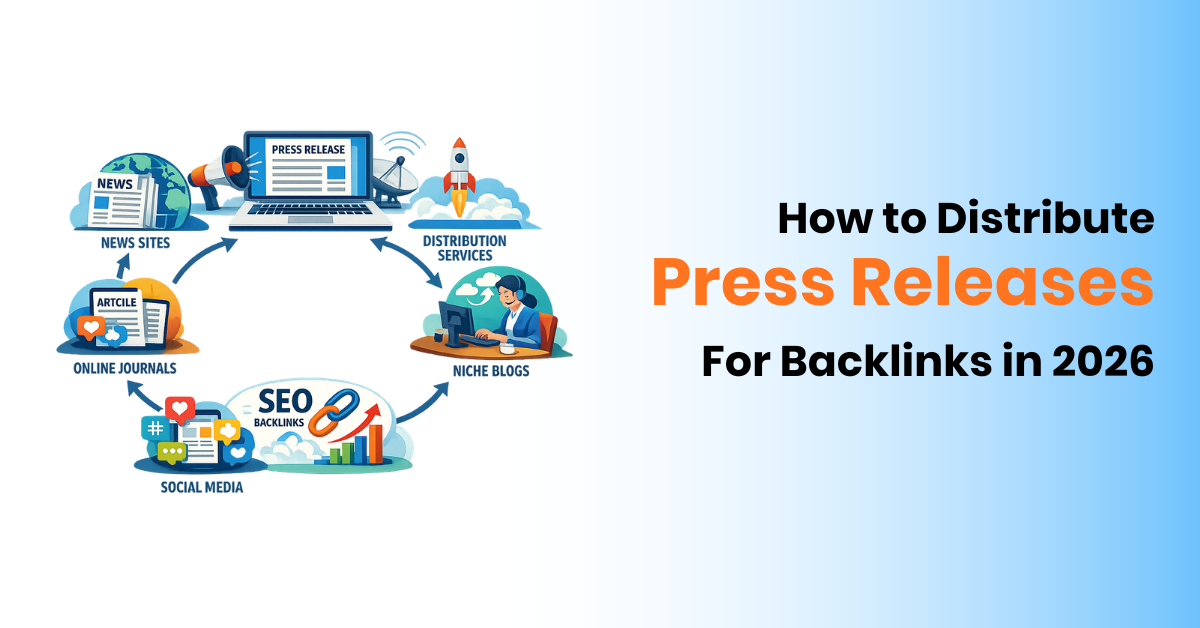
Most brands approach press release distribution the same way they approach paid ads: maximize reach, measure volume, repeat. It's the wrong mental model, and it's why most press releases produce either nothing or the wrong kind of links.
The brands getting real SEO value from press releases in 2026 are treating them as earned media plays — not syndication tools. The distinction changes everything: the angle, the distribution, the anchor text, the way success gets measured.
This guide covers what separates press releases that build genuine authority from those that quietly erode it.
Why Syndicated Press Release Links Aren't the Goal
This is the most important thing to understand before anything else: the links that appear automatically when you push a release through a press release distribution service are largely not what you're optimizing for.
When a press release gets syndicated across dozens of press release sites, most of those links appear on pages with little editorial oversight, high link density, and no meaningful audience. Google has understood this pattern for years and discounts these links accordingly. The syndication isn't worthless — it helps with brand signal distribution, entity recognition, and occasionally drives journalist discovery — but treating those syndicated links as your primary SEO outcome sets up the whole strategy wrong.
The links worth having come from what happens next: a journalist reads your release and covers the story. A blogger references your data. A newsletter editor includes your announcement. A niche publication writes their own piece. These secondary, editorially placed links are what move rankings, because they carry the contextual relevance and trust signals that syndicated links can't replicate.
The practical implication: a press release campaign should be judged by editorial pickup, not by how many domains the press release distribution touches. If you're also building editorial backlinks in parallel, this kind of PR coverage amplifies that work meaningfully.
What Makes a Press Release Actually Newsworthy
The most common reason press release campaigns fail is that the release isn't announcing anything a journalist would care about. Marketing language dressed up as news doesn't get coverage — it gets ignored.
The question worth asking before writing anything: would a reporter at an industry publication assign this story to a writer? If the answer is no, the angle needs work before the release does.
Stories that reliably earn coverage tend to fall into a few categories:
Original data and research. If your company has access to meaningful data — user behavior, industry trends, customer survey results, proprietary benchmarks — a release built around that data gives journalists something they can't get elsewhere. Data-driven releases are consistently the highest-performing format for generating editorial pickup, regardless of which press release distribution service you use.
Genuine product or company milestones. Major funding rounds, acquisitions, significant partnerships, market expansions, and meaningful user growth figures all qualify. "We added three new features" doesn't. "We crossed 1 million users in markets outside the US within 18 months of international launch" does.
Counterintuitive findings. Releases that challenge a common assumption — "contrary to industry expectation, our data shows X" — attract attention because they give journalists a hook. Confirmation of what everyone already believes is not a story.
Responses to significant industry events. When a major platform makes a change, when regulation shifts in your industry, when a widely-held assumption gets overturned by new evidence — a timely release positioning your company's perspective can earn coverage from publications already writing about the event.
If your release doesn't fit one of these patterns, the answer isn't better writing. It's a better angle.
How to Structure the Release Itself
Once you have a genuinely newsworthy angle, the structure of the release determines whether it reads like editorial content or marketing copy. Journalists make this judgment quickly.
Lead with the news, not the company. The first paragraph should contain the actual story. Background on your company, how long you've been in business, what your product does — none of that belongs in the opening. Journalists know how to find company background. What they need immediately is the news.
Write like a reporter, not a marketer. Press releases that read like promotional copy signal that the writer is thinking about brand messaging, not newsworthiness. Factual, specific, understated language performs better because it gives journalists something they can quote or adapt without heavy editing.
Use quotes that add information. Executive quotes that say things like "We're thrilled to announce this exciting milestone" add nothing. Quotes that explain what the news means, what decision led to it, or what it signals about the industry give journalists usable material.
Keep links minimal and branded. Two links is a reasonable ceiling for most releases. Anchor text should be branded or entity-based — "According to [Company Name]'s 2026 SMB Report" rather than "best SEO services for small businesses." Keyword-optimized anchors in press releases are a well-documented spam signal. Save keyword-focused anchor text for editorial placements where it appears naturally within content.
Distribution: Targeted Beats Broad Every Time
The temptation with press release distribution is to maximize reach. More outlets, more syndication, more coverage. In practice, broad distribution to low-quality portals produces a recognizable pattern — high link volume, low editorial quality, no real audience — that Google has learned to discount and that can dilute your link profile's overall quality signal.
A more effective approach combines a single premium distribution channel with direct manual outreach. The distribution handles baseline syndication and journalist discovery. The outreach goes to specific reporters, editors, and bloggers at publications your audience actually reads — pitching the story as a story, not forwarding the release verbatim.
Choose press release sites based on journalist usage, not domain metrics. The question isn't which platform has the highest DA. It's which platforms journalists in your industry actively monitor for story leads. A release that gets discovered by one reporter at a relevant trade publication will produce more SEO value than syndication across a hundred portals no journalist visits.
Match distribution targets to the story's natural audience. A marketing technology company announcing research findings should target marketing, SaaS, and tech publications. A regional service business announcing a local expansion should focus on city publications, regional newsrooms, and local business media — not broad national wires with no geographic relevance to the story.
Frequency matters. Publishing releases weekly just to maintain a link-building cadence is a pattern that erodes credibility with both journalists and Google. Quarterly releases tied to real milestones, paired with consistent link building through editorial channels, produces a more natural and sustainable backlink profile than forced PR volume.
Anchor Text and Entity Signals
How you link inside a press release matters more than most brands realize, because the anchor text pattern across a release campaign becomes a visible footprint.
The right approach uses branded and entity-based anchors throughout: "Source: [Company Name]," "According to [CEO Name]," "[Company Name]'s full report is available at [URL]." These formats look exactly like how journalists naturally cite sources — because that's what they're mimicking.
What to avoid: exact-match commercial anchors ("best link building services," "affordable SEO packages," "top press release distribution service"). These read as manipulation signals, not editorial attribution, and Google has become increasingly precise about detecting this pattern across a domain's link profile.
If keyword-anchored links are part of your SEO strategy, the right home for them is guest posts and niche editorial placements — contexts where a content editor has made an active choice to include a link with specific anchor text because it fits the article.
The Role of Brand Mentions Beyond Direct Links
Backlinks are measurable, which makes them the default metric for press release campaigns. But in 2026, Google's ability to process unlinked brand mentions as authority signals means that coverage without a direct link still has SEO value.
A newsletter with 50,000 subscribers that mentions your company and links to your research — even with a nofollow tag or no link at all — contributes to branded search volume, entity recognition, and the broader signal pattern that tells Google your brand is being discussed in relevant contexts. These diffuse signals accumulate over multiple campaigns and compound in ways that a single high-DA link doesn't replicate.
This is one reason measuring press release campaigns purely on backlink count misses the point. Track editorial pickups, newsletter mentions, branded search volume changes, and referral traffic alongside raw link metrics. The full picture of a campaign's value often looks different from what backlink monitoring tools show.
Supporting Press Releases With Editorial Link Building
Press releases work best as one layer of a broader link building strategy, not as a standalone tactic. The most effective campaigns pair PR coverage with editorial placements that support the same pages.
When a press release goes out, the pages it links to — typically your homepage, a research landing page, or a key product page — benefit from simultaneous editorial activity. Guest posts, niche edits, and contextual mentions that point to the same pages during the same period create a diversified, natural-looking link pattern: PR mentions, editorial placements, and brand citations all pointing to the same content in overlapping timeframes.
This matters because a sudden cluster of syndicated press release links pointing to a single page, with no other concurrent link activity, can look like a manipulation attempt. Distributed link building that includes PR as one source among several doesn't create that signal.
What to Measure After Distribution
The metrics that matter for press release campaigns extend well beyond what a backlink tracker reports.
Editorial pickups — how many journalists or bloggers independently covered the story, beyond the syndication footprint. This is the primary indicator of whether the angle worked.
Referral traffic — sessions arriving from coverage. A single pickup from a relevant niche publication with an engaged readership can drive more qualified traffic than hundreds of syndicated portal links.
Branded search volume — whether searches for your brand name increased in the weeks following distribution. This is a measurable downstream effect of real coverage reaching real audiences.
Delayed mentions — editorial references that appear weeks or months after distribution, when someone researching a topic discovers your release through a journalist's coverage and cites it independently. These delayed links often carry more authority than the immediate syndication, because they come from genuinely independent editorial decisions.
Setting up monitoring for brand mentions — through Google Alerts, media monitoring tools, or manual search — lets you track this secondary coverage and identify publications worth pitching directly on future releases.
A Comparison Worth Keeping in Mind
|
Spammy Distribution Path |
Credible Digital PR Strategy |
|
Mass submission to hundreds of portals |
Targeted newsroom syndication + manual outreach |
|
Keyword-stuffed anchor text |
Branded and entity-based mentions |
|
Generic promotional announcements |
Data-driven or genuinely newsworthy stories |
|
No journalist contact |
Direct pitching to relevant reporters and editors |
|
Success measured by link volume |
Success measured by editorial pickup and brand mentions |
The left column describes what most press release campaigns look like. The right column describes what makes a campaign worth running.
vefogix
Frequently Asked Questions
Syndicated links from press release distribution portals are typically discounted by Google because the pattern is well understood and doesn't carry editorial intent. The links that carry real weight are those earned when journalists and publishers independently reference your story in their own content. Those are treated as editorial backlinks, which is a meaningfully different signal.
One or two is the right ceiling for most releases. One link to your homepage or the primary page the release is about, and optionally one link to supporting material like a full report or research page. More than that starts to look like the release was written for links rather than for coverage.
As often as you have something genuinely newsworthy to announce — typically quarterly at most for most businesses, unless major milestones happen more frequently. If you need consistent visibility and link building between releases, editorial content, guest posting, and content-led outreach are more appropriate channels than forced PR.
A press release distribution service syndicates your release to a network of outlets automatically. Manual outreach involves identifying specific journalists, editors, or bloggers who cover your space and pitching them the story directly — often with a personalized angle specific to their publication. Distribution handles reach; outreach drives editorial coverage. The most effective campaigns use both.